CHEF SERIES
Meet the Chef Preserving Tradition & Pushing Boundaries at Pabu Izakaya: Chef Patrick Collins
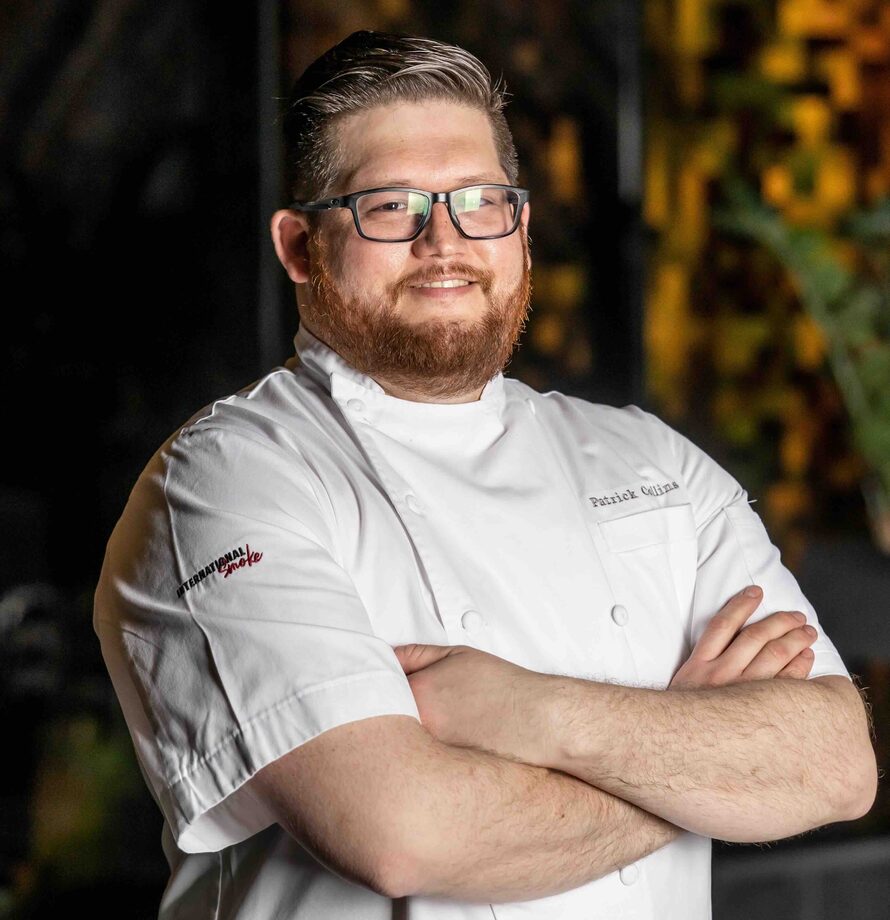
Chef Patrick Collins
Some chefs find their way into the kitchen later in life but for Chef Patrick Collins, it started at his grandparents’ house: five nights a week after school, side by side with his grandfather, learning how to cook for a table full of family. Handmade tortillas every other day. Blue-ribbon banana bread cooling on the counter. Baskets of peak-season produce showing up in place of holiday gifts. Food wasn’t just dinner, it was culture, community, and craft.
Today, as Executive Chef at Pabu Izakaya in San Francisco, Collins brings that same foundation to a restaurant that thrives on precision and volume. With fish flown in directly from Japan, a sushi program that shifts with international markets, and ramen broth that simmers for 24 hours before ever reaching a bowl, his kitchen runs on intention. Every detail matters. Every ingredient has a purpose.
But beyond the technique and the sourcing, what drives him most is the team beside him: the cooks, sous chefs, and collaborators who execute at a high level night after night in one of the city’s busiest dining rooms.
In our latest Chef Series, Collins shares how his upbringing in California’s Central Valley shaped his approach to seasonality, the dishes that best capture Pabu’s spirit, and the realities of building a career in an industry that demands both sacrifice and heart.
Today, as Executive Chef at Pabu Izakaya in San Francisco, Collins brings that same foundation to a restaurant that thrives on precision and volume. With fish flown in directly from Japan, a sushi program that shifts with international markets, and ramen broth that simmers for 24 hours before ever reaching a bowl, his kitchen runs on intention. Every detail matters. Every ingredient has a purpose.
But beyond the technique and the sourcing, what drives him most is the team beside him: the cooks, sous chefs, and collaborators who execute at a high level night after night in one of the city’s busiest dining rooms.
In our latest Chef Series, Collins shares how his upbringing in California’s Central Valley shaped his approach to seasonality, the dishes that best capture Pabu’s spirit, and the realities of building a career in an industry that demands both sacrifice and heart.
INKIND: What first drew you into the kitchen, and what continues to inspire you today?
COLLINS: I grew up in the kitchen. My grandparents were the ones who got me into cooking. I had two sisters and two cousins close to my age, and we’d go to my grandparents’ house after school. Grandpa made dinner for us five days a week, and I’d help him in the kitchen.
Sundays at the ranch were big family gatherings centered around food. My grandma was known for her preserves and baking — banana bread, zucchini bread, cookies — and she was kind of a local legend. She won blue ribbons at fairs for her baking.
Grandpa handled the savory side. He handmade tortillas every other day. Even though he was Hispanic, he had culinary influence from friends of all backgrounds — Chinese, Mexican, a wide variety. We were in the Central Valley, so we had incredible produce. He was even part-owner of a grocery store at one point, so I learned a lot about sourcing and ingredients from him.
Now when I’m cooking, I try to take one seasonal ingredient and build the whole dish around it. I ask myself, “How can I make this ingredient interesting today?”
INKIND: From sourcing ingredients to building your team, what principles guide your approach?
COLLINS: I like to know exactly where our produce is coming from. Growing up in the Central Valley, produce was a culture. Instead of bringing gifts for holidays, we’d show up with a basket of oranges or whatever was in season. I carry that mindset into the restaurant.
For example, we have a really strong sushi program, and people don’t always realize how much work goes into that. Most of our fish is flown directly from Japan, so we’re constantly watching market trends and even accounting for international holidays. Those trends change weekly.
When it comes to people, I look for individuals who truly want to be here. I’m straightforward about the commitment and demand this job requires. In my early years as an Executive Chef, I was still solidifying my identity and niche. Now I’m focused on building others up.
As a leader, I’m always learning. The stereotypical chef who barks orders isn’t helpful. I want to create an environment where people want to work — especially in a high-volume restaurant like ours, where turnover can be a challenge. It’s about balancing high standards with a welcoming culture.
COLLINS: I grew up in the kitchen. My grandparents were the ones who got me into cooking. I had two sisters and two cousins close to my age, and we’d go to my grandparents’ house after school. Grandpa made dinner for us five days a week, and I’d help him in the kitchen.
Sundays at the ranch were big family gatherings centered around food. My grandma was known for her preserves and baking — banana bread, zucchini bread, cookies — and she was kind of a local legend. She won blue ribbons at fairs for her baking.
Grandpa handled the savory side. He handmade tortillas every other day. Even though he was Hispanic, he had culinary influence from friends of all backgrounds — Chinese, Mexican, a wide variety. We were in the Central Valley, so we had incredible produce. He was even part-owner of a grocery store at one point, so I learned a lot about sourcing and ingredients from him.
Now when I’m cooking, I try to take one seasonal ingredient and build the whole dish around it. I ask myself, “How can I make this ingredient interesting today?”
INKIND: From sourcing ingredients to building your team, what principles guide your approach?
COLLINS: I like to know exactly where our produce is coming from. Growing up in the Central Valley, produce was a culture. Instead of bringing gifts for holidays, we’d show up with a basket of oranges or whatever was in season. I carry that mindset into the restaurant.
For example, we have a really strong sushi program, and people don’t always realize how much work goes into that. Most of our fish is flown directly from Japan, so we’re constantly watching market trends and even accounting for international holidays. Those trends change weekly.
When it comes to people, I look for individuals who truly want to be here. I’m straightforward about the commitment and demand this job requires. In my early years as an Executive Chef, I was still solidifying my identity and niche. Now I’m focused on building others up.
As a leader, I’m always learning. The stereotypical chef who barks orders isn’t helpful. I want to create an environment where people want to work — especially in a high-volume restaurant like ours, where turnover can be a challenge. It’s about balancing high standards with a welcoming culture.
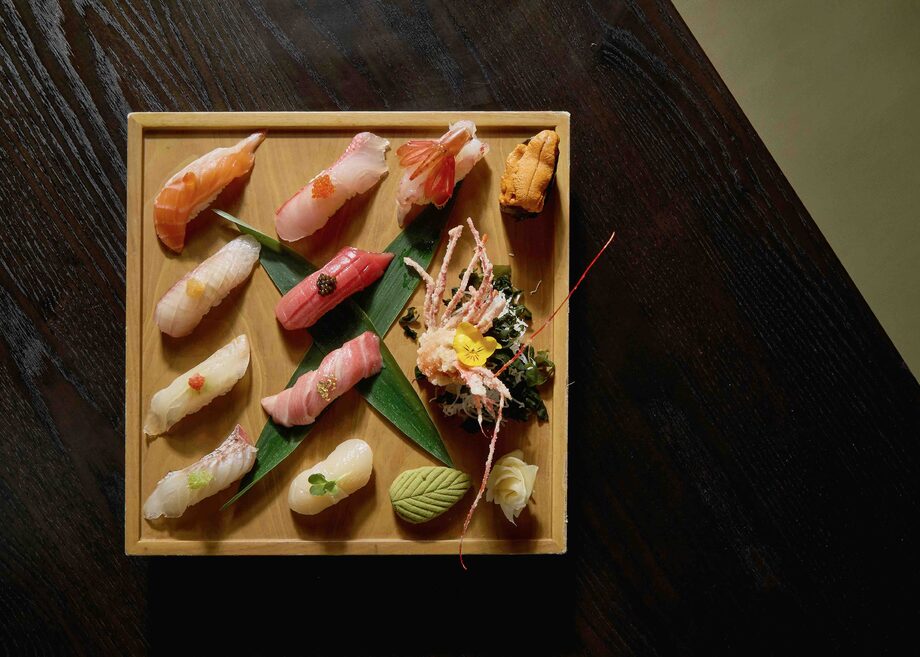
INKIND: For a first-time guest, what’s a must-order combo that captures the spirit of your restaurant?
COLLINS: Start with the Toro & Caviar Parfait. It’s luxurious and a great showcase of our product.
Then I’d go with the Mizuna Citrus Salad and Gyoza, followed by the Duck Duck Ramen and Pabu’s “San Francisco Treat” Fried Rice.
The Duck Duck Ramen is truly a labor of love — the broth alone takes 24 hours. The drumettes cure for 24 hours and then cook for another eight.
The “San Francisco Treat” is a play on Rice-A-Roni, which was created right here in San Francisco. Their old slogan was “Rice-A-Roni, the San Francisco treat.” Our version pays homage while elevating it with Dungeness crab and matsutake mushroom.
For dessert, the Japanese Honey Toast is always a great choice. In the summer, the Mango Shaved Ice is super refreshing — we use an old-school cast iron hand crank to shave the ice to the perfect texture.
COLLINS: Start with the Toro & Caviar Parfait. It’s luxurious and a great showcase of our product.
Then I’d go with the Mizuna Citrus Salad and Gyoza, followed by the Duck Duck Ramen and Pabu’s “San Francisco Treat” Fried Rice.
The Duck Duck Ramen is truly a labor of love — the broth alone takes 24 hours. The drumettes cure for 24 hours and then cook for another eight.
The “San Francisco Treat” is a play on Rice-A-Roni, which was created right here in San Francisco. Their old slogan was “Rice-A-Roni, the San Francisco treat.” Our version pays homage while elevating it with Dungeness crab and matsutake mushroom.
For dessert, the Japanese Honey Toast is always a great choice. In the summer, the Mango Shaved Ice is super refreshing — we use an old-school cast iron hand crank to shave the ice to the perfect texture.
INKIND: What’s one piece of advice you’d share with a chef or restaurateur just starting out?
COLLINS: Go stage. Or at least get your foot in the door somewhere and work your way up.
My generation worked our way through every position, and that’s important. You need to understand every role in a restaurant. And if you don’t like how hard it is at the beginning, this might not be the industry for you.
It doesn’t get easier at the top — it gets harder. As a Chef, you should be able to fill any position in the restaurant while also handling your responsibilities as an operator. You have to stay relevant and keep guests coming back.
There’s a lot of sacrifice. It’s physically and mentally demanding, and you’ll miss holidays and weekends. But if you’re willing to put in the work, the payoff is worth it.
INKIND: What’s something guests might not realize about what happens behind the scenes in your kitchen?
COLLINS: Updating the menu takes a lot more collaboration and time than people think.
Take Super Bowl week in the Bay Area — we started talking about that the February before. Valentine’s Day is another example. We start planning in December, and once R&D begins, you realize how much adjustment is needed. Sometimes a dish changes two or three times before it ever hits the plate.
We’re lucky to have a team from many different backgrounds. I know I’ll never know every technique or ingredient, so I’m always open to new ideas and perspectives.
INKIND: What makes Pabu Izakaya special for you?
COLLINS: When I first joined, it was challenging because I hadn’t formally studied Japanese culinary techniques. But it was exciting. For the first three months, I was constantly learning from the team and doing my own research.
I’m part Japanese, so it was meaningful to connect more deeply with the culture while learning new techniques. My kids are still young, but I look forward to passing that knowledge on to them one day.
Now, a few years in, I feel lucky. It’s a huge restaurant, and to keep it filled with guests who want to come back — that’s not easy in this industry. Building something that’s thriving feels good.
I also have an incredible team. I tell my sous chefs, Chef Moises and Chef Genesis, to recognize what we’re doing here. The events we execute and the volume we handle at such a high level — not everyone can do that. What we have here is special.
COLLINS: Go stage. Or at least get your foot in the door somewhere and work your way up.
My generation worked our way through every position, and that’s important. You need to understand every role in a restaurant. And if you don’t like how hard it is at the beginning, this might not be the industry for you.
It doesn’t get easier at the top — it gets harder. As a Chef, you should be able to fill any position in the restaurant while also handling your responsibilities as an operator. You have to stay relevant and keep guests coming back.
There’s a lot of sacrifice. It’s physically and mentally demanding, and you’ll miss holidays and weekends. But if you’re willing to put in the work, the payoff is worth it.
INKIND: What’s something guests might not realize about what happens behind the scenes in your kitchen?
COLLINS: Updating the menu takes a lot more collaboration and time than people think.
Take Super Bowl week in the Bay Area — we started talking about that the February before. Valentine’s Day is another example. We start planning in December, and once R&D begins, you realize how much adjustment is needed. Sometimes a dish changes two or three times before it ever hits the plate.
We’re lucky to have a team from many different backgrounds. I know I’ll never know every technique or ingredient, so I’m always open to new ideas and perspectives.
INKIND: What makes Pabu Izakaya special for you?
COLLINS: When I first joined, it was challenging because I hadn’t formally studied Japanese culinary techniques. But it was exciting. For the first three months, I was constantly learning from the team and doing my own research.
I’m part Japanese, so it was meaningful to connect more deeply with the culture while learning new techniques. My kids are still young, but I look forward to passing that knowledge on to them one day.
Now, a few years in, I feel lucky. It’s a huge restaurant, and to keep it filled with guests who want to come back — that’s not easy in this industry. Building something that’s thriving feels good.
I also have an incredible team. I tell my sous chefs, Chef Moises and Chef Genesis, to recognize what we’re doing here. The events we execute and the volume we handle at such a high level — not everyone can do that. What we have here is special.
About inKind
inKind is the only dining rewards app that gives you 20% BACK every time you dine. Download the inKind app to explore and earn inKind Cash Back at Michelin-starred restaurants, cozy neighborhood coffee shops, and even the hottest nightclubs.
At inKind, we believe restaurants are the heartbeat of a city. That’s why we back them — and reward you for doing the same. Our unique model supports restaurants with funding,
marketing support, and more, so every time you dine with inKind, you’re helping restaurants thrive.
As a thank you for supporting the amazing restaurants in our network, we give you 20% back on your meal. No codes, no points, no catches.
At inKind, we believe restaurants are the heartbeat of a city. That’s why we back them — and reward you for doing the same. Our unique model supports restaurants with funding,
marketing support, and more, so every time you dine with inKind, you’re helping restaurants thrive.
As a thank you for supporting the amazing restaurants in our network, we give you 20% back on your meal. No codes, no points, no catches.